Self-doubt can feel like standing backstage before a big performance. Your mind is loud. Your body is tense. You wonder if you belong there.
But something shifts when you step forward.
-You take a breath. -You begin. -You find your rhythm.
Work and leadership are not so different.
You rarely feel fully ready. Confidence does not come before action. It grows as you show up.
A few years ago, I faced this myself.
I was deciding whether to leave a career in fashion to explore neuroscience and coaching.
On paper, I had the experience and the training. But inside, another voice was louder.
What if you fail? What if you’re not as capable as people think? Maybe wait until you feel ready.
I thought I was being careful.
But I was listening to my inner critic.
That voice is not truth. It is fear trying to protect us.
Once I saw that, I started asking different questions.
What if I succeed? What if I already have what I need? What if waiting means never starting?
So I moved forward.
Not without fear. But with more awareness.
And things opened.
This is where coaching helps.
A coach does not remove doubt. They help you see it clearly.
They help you notice the voice, question it, and reconnect with your strengths and purpose.
Over time, you learn to act even when doubt is present.
Self-compassion plays a key role here.
In my research, I found that people who were more self-compassionate were better able to handle stress and adapt to challenges (Maury, 2023).
Self-compassion starts with awareness.
Rick Carson calls the inner critic the “gremlin.” The first step is simply to notice it.
Then, a simple practice:
Think about how you would respond to a friend who just failed. You would likely be kind, patient, encouraging.
Now ask yourself, How do I speak to myself in that same situation?
Most of us are much harder on ourselves.
This awareness creates a choice.
We can keep the harsh voice. Or we can begin to respond with more support and understanding.
Neff and Germer (2018) show that self-compassion builds inner strength and helps us move forward, not by ignoring mistakes, but by learning from them without shutting down.
You do not need to eliminate self-doubt to grow.
You need to change your relationship with it.
Notice it. Question it. Soften it.
And keep moving.
So let me ask you:
Who is driving your career right now? Is it you, or your inner critic?
And what would change if you took the wheel?
References:
Carson, R. D. (1983). Taming your gremlin: A guide to enjoying yourself. Perennial Library.
Neff, K., & Germer, C. (2018). The mindful self-compassion workbook: A proven way to accept yourself, build inner strength, and thrive. Guilford Publications.
Maury, S. M. (2023). Resilience during the COVID-19 pandemic: Experiences of single working mothers (Publication No. 30820306) [Doctoral dissertation, Saybrook University]. ProQuest Dissertations and Theses Global.
Aristotle said, “Knowing yourself is the beginning of all wisdom.”
And yet, research shows that only 10 to 15 percent of us are truly self-aware (Eurich, 2017).
Self-awareness sounds simple. But it takes practice.
It means noticing what is happening inside you. Your thoughts, emotions, body sensations, behaviors, and even how others experience you (Carden et al., 2022).
From a brain perspective, this matters.
Without awareness, the amygdala reacts fast. We get pulled into stress, habits, and old patterns.
With awareness, something shifts. The brain slows down. We move from reaction to choice.
This is where leadership changes.
-You can sense stress earlier. -Prepare for hard conversations. -Respond with intention instead of impulse.
Research shows self-awareness supports focus, decision-making, performance, and psychological safety (Dierdorff & Rubin, 2015; Gudre, 2025).
But how do we build it?
It starts with small moments of attention.
For me, one practice is mindful walking.
I slow down and notice what is around me. Colors, light, sounds. My breath. My body. My steps.
Nothing changes outside. But I become more aware inside.
In my research, practices like mindfulness and gratitude helped people stay resilient during stressful times (Maury, 2023). They created space to pause, care for themselves, and respond differently.
That pause is everything.
In coaching, this is where we begin.
We notice.
You might ask yourself:
-What happens in my body under pressure? -What thought shows up first? -What emotion is underneath? -What story am I telling myself?
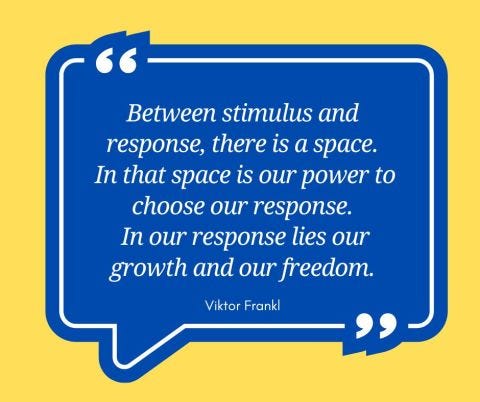
Awareness creates space.
And in that space, you can choose a different response. A more aligned one.
What is one behavior you noticed and want to understand better right now?
References:
Carden, J., Jones, R. J., & Passmore, J. (2022). Defining self-awareness in the context of adult development: A systematic literature review. Journal of Management Education, 46(1), 140-177.
Dierdorff, E. C., & Rubin, R. S. (2015). Research: We’re not very self-aware, especially at work. Harvard Business Review, 12.
Eurich, T. (2018). Insight: The surprising truth about how others see us, how we see ourselves, and why the answers matter more than we think. Crown Currency.
Gudre, L. (2025). How Psychological Safety Is Created or Damaged in Healthcare Teams: the Role of Leadership Traits and Self-Awareness.” Please keep some of the research references from this post and the ones above
Maury, S. M. (2023). Resilience during the COVID-19 pandemic: Experiences of single working mothers (Publication No. 30820306) [Doctoral dissertation, Saybrook University]. ProQuest Dissertations and Theses Global.”
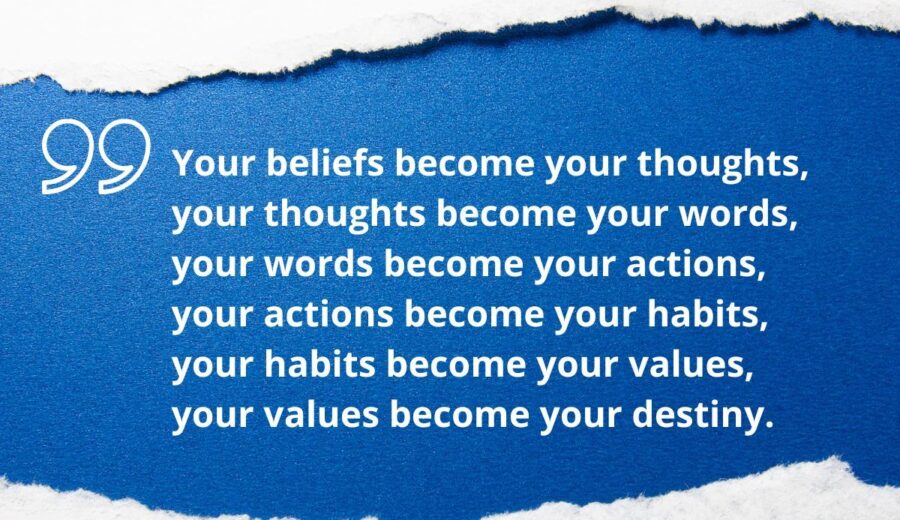
Our beliefs are the foundation of our thoughts, words, and actions. They shape our habits and values and, ultimately, our lives.
Through neuroplasticity, we can understand how our beliefs can significantly change our lives. We have the remarkable ability to reorganize our thinking and behavior, paving the way for personal growth and transformation.
This insight allows us to challenge and reshape our limiting beliefs, creating space for new and empowering thoughts and behaviors.
What happens when we stop defending our beliefs and start observing them?
We hold on to beliefs because they feel safe. They help us make sense of the world.
From a brain perspective, beliefs are shortcuts that help us predict and decide quickly. But when life changes and our beliefs don’t, the brain resists. It can even feel uncomfortable to question them.
And yet, this is where growth begins.
Beliefs are not fixed. Through neuroplasticity, we can update how we think and act.
This is where coaching helps: it helps you see them clearly.
Where did this belief come from? How does it help you?
How does it limit you?
Many people realize that old beliefs that once protected them now hold them back.
Awareness creates space. And in that space, new choices become possible.
We are not our beliefs. We can change them.
What belief in your life might be ready for an update?
Have you ever had a moment when someone really listened to you and everything shifted?
No one interrupted. No one rushed to offer advice or share their own story. They just listened, and somehow, in that quiet attention, you felt seen entirely.
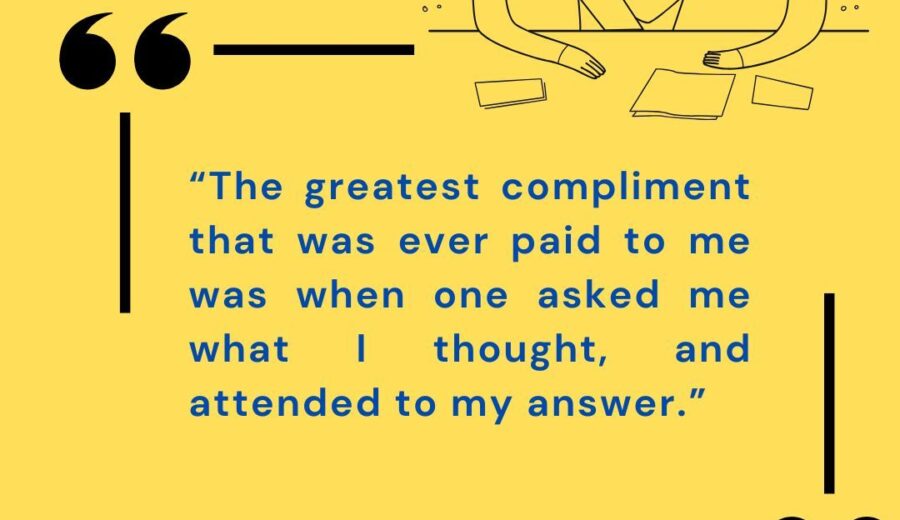
Henry David Thoreau once wrote: “The greatest compliment that was ever paid to me was when one asked me what I thought, and attended to my answer.”
That kind of listening is rare. It reminds us that we matter and that our voices count.
As a coach, I often see this.
In coaching, we: · Listen not to reply, but to understand. · Hold space not to fix or judge but to reflect, validate, and invite deeper insight. · Stay present, curious, and open. · Trust that everyone has something meaningful to say, if we make room for it.
And the science backs it up: – Being listened to releases oxytocin, the hormone that helps us feel safe, connected, and supported. – It lowers cortisol, reducing stress and calming the nervous system. -It activates the brain’s reward system, promoting clarity, motivation, and creative thinking.
That’s why real listening is transformational.
It’s a gift that says: “I see you. I’m here. You matter.”
Imagine how our relationships, workplaces, and communities could change if we all listened with the presence of a coach.
Have you ever experienced a moment where being heard made all the difference?
Executive, Resilience, and Wellness Coach — SelfPath Coaching, LLC Doctor of Philosophy (PhD), Mind–Body Medicine — Saybrook University By George Cassidy Payne
When Sylvie Maury speaks, her presence arrives before her words do. Steady, grounded, attentive, she slows a room simply by being in it. It is the presence of someone who not only understands the nervous system academically but has endured its storms and learned to guide others through their own.
Maury is the founder of SelfPath Coaching, LLC, and works as an Executive, Resilience, and Wellness Coach. She holds a PhD in Mind–Body Medicine from Saybrook University. Her clients are leaders, teams, and individuals navigating upheaval — organizational fractures, personal transitions, lingering trauma, and the quiet exhaustion that accumulates in high-achieving lives.
“People think mindfulness is a technique,” she says. “But it’s a way of being — a way of returning to yourself.”
Born in Paris, Maury grew up surrounded by family, friends, and a city that nurtured curiosity and artistic expression. Life was joyful and full — until, at 18, her father accepted a job in the United States. “It felt like I was going on vacation,” she recalls. Texas was sunny and spacious, a place where she could explore, drive, and reinvent herself. College in Austin introduced her to possibility, complementing the discipline she had learned in Paris. Her curiosity about identity, behavior, and human potential would eventually guide her to a PhD in Mind–Body Medicine.
But it was personal crisis that truly propelled her toward coaching. Her mother’s decline and passing, a painful divorce, and a child’s suicide attempt converged in a period of profound upheaval. “I was running every day. I looked strong. Inside, I was surviving,” she says. Her nervous system had understood the distress before her mind could articulate it — texts twisted her stomach, silence weighed heavily. This awareness drew her deeper into somatic practices, movement, and mind–body integration. “The body speaks before the mind does. When people learn to listen, everything changes.”
Her work with her own children revealed the transformative power of neuroplasticity. Initially focused on supporting them through ADHD challenges, she realized the brain could reshape not only behavior but self-perception. Learning became an act of creativity, connecting spelling lessons to colors, stories, and songs — turning struggle into joy. “I grew up believing the brain is fixed. Then I learned it could change. You can be anything you want to be.”
In coaching leaders, Maury sees familiar patterns: executives caught in self-imposed loops, blind to doors opening before them. One client, disillusioned in her role, began seeking opportunities elsewhere. Through coaching, she realized she loved her work but had never requested the support she needed. By initiating a conversation with her director, she reshaped her position and found fulfillment. “Coaching increases confidence,” Maury says. “We ask questions. We notice triggers, patterns, and behaviors. Awareness is the win — it creates space for choice.”
She emphasizes that leadership is inseparable from the state of the brain. Presence ripples through teams via mirror neurons — nervousness, impatience, or distraction unconsciously spreads, shaping empathy, collaboration, and creativity. “Listening, acknowledging, showing curiosity — these actions create psychological safety,” Maury explains. Her preparation — meditation, breathwork, shaking practices, loving-kindness exercises — is her “pharmacy” before sessions. Neuroscience confirms its effect: psychological safety quiets the amygdala and frees the prefrontal cortex, allowing reflection, empathy, and collaboration rather than fear-driven reaction.
Mindfulness, in Maury’s view, is not a quick fix. It is a way of being. Even a walk in the park becomes a lesson in presence: noticing the seasons, the trees, hidden nests, and the people around her. Mindful conversation, eating, and listening root us in awareness. Every coaching engagement begins with a conversation, setting expectations and boundaries. When clients experience transformation, “it is amazing. Helping someone have an aha moment — that’s why I do this work.”
The body and mind, Maury insists, are one system. She recalls moments during personal upheaval when a text left her physically ill before she could process it mentally. Learning to listen to the body, recognize stress loops, and co-regulate with others became central to her approach. Resilience is embodied.
In team coaching, invisible dynamics quietly erode trust, often rooted in self-distrust. “Self-compassion is the starting point. When someone doesn’t trust themselves, they imagine the worst in others,” she says. Rather than offering advice, she asks questions, reflects observations, and creates neutral space. Awareness alone can shift dynamics, helping people notice dominance or bullying and choose differently. Her approach has proven effective across industries and cultures, including the high-pressure fashion sector.
Maury speaks four languages — French, English, Spanish, and Portuguese — each revealing a different facet of herself. Spanish, she says, feels like stepping into a ready-made character; English carries complexity and cultural nuance; French remains tied to her roots; Portuguese offers yet another lens on expression. “Language shapes perception,” she reflects. “Each language brings out a different version of me, revealing nuances I might never otherwise notice.”
Connection, kindness, and gratitude are central to her philosophy. Acts of kindness release oxytocin, build trust, and activate reward centers. Gratitude strengthens emotional regulation, mood, and even longevity. Awareness and reflection open choices — observing kindness, noticing support, and practicing gratitude activate empathy and belonging.
Finally, Maury speaks to authenticity. The masks we wear — the confident leader, the joyful friend, the calm parent — serve a function, but living behind them too long disconnects us from who we truly are. Transformation begins when we feel safe enough to be real. Awareness of beliefs, triggers, and patterns — personal and systemic — is the foundation for lasting change. “When you notice, reflect, and understand, new stories and behaviors can emerge. That is the work we do in coaching: returning to yourself.”
Through her work, Sylvie Maury bridges science and experience, mind and body, strategy and presence. Transformation begins with noticing what is usually overlooked, allowing connection to flourish, and giving the nervous system freedom to lead, love, and create.
About the Author George Cassidy Payne is a freelance journalist, poet, and crisis counselor whose work explores the intersections of politics, culture, psychology, and the natural world. A longtime community organizer and advocate for mental health, he has served as a 988 Suicide Prevention Counselor, a nonprofit strategist, and an adjunct professor of philosophy. His essays and reporting appear in both local and national outlets, where he brings a reflective, human-centered lens to stories of resilience, justice, and everyday life.
After talking to my son on our way back from school, I realized I had been coaching him for years. Finally, it dawned on me that I was listening to him as a coach does and asked questions that moved him forward. I helped him reframe his experience, empowered him, and celebrated his success.
This blog post will show you what I mean by listening as a coach. I also share the questions I ask, how I help my children reframe their thoughts and experiences, how I empower them, and, finally, what I celebrate as a coach and a parent.
I listen Better
In coaching, Active listening is a way to be there for the other person. We listen to every word, not interrupting, not jumping to conclusions, observing the posture, gestures, and facial expressions ___TAKING IT ALL IN!
As a parent, it implies putting my phone away and being physically and mentally there for my children. Active listening also means not thinking about what I will answer before they finish talking (I know, been there…). It gives my children the space they need and shows them that I value their conversations, see them, and care for them.
I ask engaging questions
In coaching, we call them Powerful questions. As Tony Stoltzfus described, “they can jump-start creativity, change our perspective, empower us to believe in ourselves, push us to think things through, or call us to action”
As a parent, I try to ask open-ended questions using How or What. I avoid the devaluating and judgmental Why such as Why did you mess up thisquiz/game? Which will end the conversation and make my child feel terrible.
Instead, I ask:
What do you think happened?
How did it make you feel?
What can you do now?
What would help you?
How do you plan to do it?
I help reframe their thoughts and experiences
Reframing can change our body’s stress response triggered by our perception of stress. It activates the prefrontal cortex, associated with our executive functions. Executive functions are complex cognitive processes that include working memory, planning, cognitive flexibility, decision-making, problem-solving, and self-control. When reframing, children feel less stressed, remember better, solve problems, make decisions, and learn to control their reactions.
The Mindfulness S.T.O.P. Practice to help take a step back
S__Stop
T__Take a breath
O__Observe what comes up
P__Proceed with intentionality
This tool helps pause and see things from a different perspective. It’s an excellent time to reflect and ask questions challenging their thoughts:
What facts support this?
How have you handled this before?
Will it matter in a month? How so?
Are your thoughts helping you right now?
How could you see this differently?
What can you accept or not from this person/situation?
What advice would you give a friend?
I empower them
Coaching taught me to let my children experience their lives. It doesn’t mean I don’t have clear boundaries with what they can and cannot do. It just shows them that I trust them. I create psychological safety at home. My children are allowed to take risks, try new things, and make mistakes. They know that failure is OK and that it’s a part of learning.
They try, they fall, and try again until they succeed or try something else. I want my children to try many things and figure out what they are excited about. I welcome and even encourage new ideas and change. This mindset promotes learning, perseverance, and resilience.
I Celebrate every success
Coaching taught me to celebrate every step of their journey. It’s about celebrating the perseverance, patience, or other skill that got them there. This validation builds confidence.
How do you celebrate the journey?
–Did you notice how it was much easier for you to…? You have learned so much! Do you remember what you did to get where you are now? You can be proud of your achievements! You showed___and___, excellent skills!
–I saw you doing … that you learned last year, and now you can… What differences do you notice this year? How do you feel about it? What have you learned about yourself?
Celebrating successes is reflecting on the journey to get there.